
Operations Diagnostics
When frictions keep reappearing.
Without proper diagnostics, every improvement is guesswork. And with incoherent processes, your results will always be sabotaged by things like:
Process diagnostics is the very foundation of any kind of change and will ultimately save a lot of time in the long-run. Double-checking a change process is not optional; it is the first step.
why diagnostics is the most essential step
Change without diagnosis is costly guesswork. For SMEs, diagnostics replace intuition with a factual baseline, revealing hidden bottlenecks and execution gaps that org charts often mask. By surfacing the root causes of underperformance before you commit resources, you ensure that every intervention is targeted, sequenced, and aligned with those who actually do the work.
Get to the bottom
Our Framework
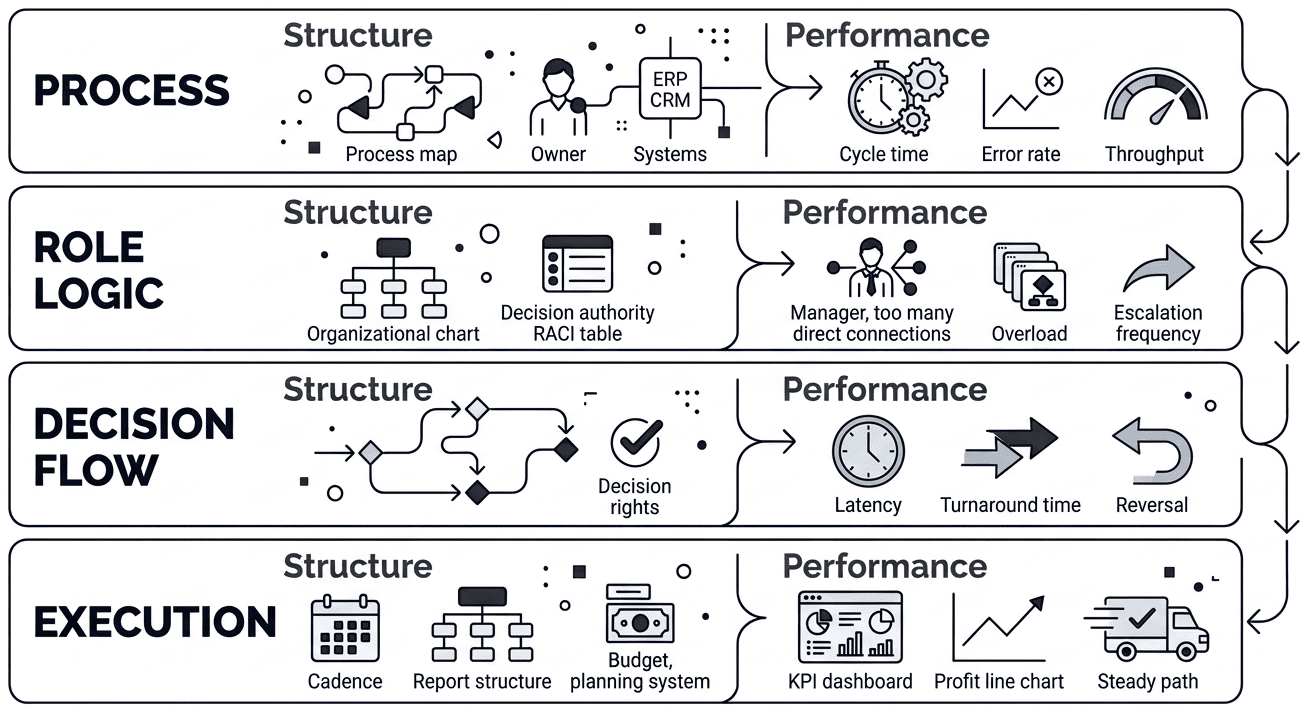
Our diagnostic examines four layers of your organizational structure through two lenses: Structure and Performance. The framework is designed to surface gaps in your structural architecture, not just isolated data points.
Ready to See Your Operations Clearly?
Move towards efficiency
Our Method
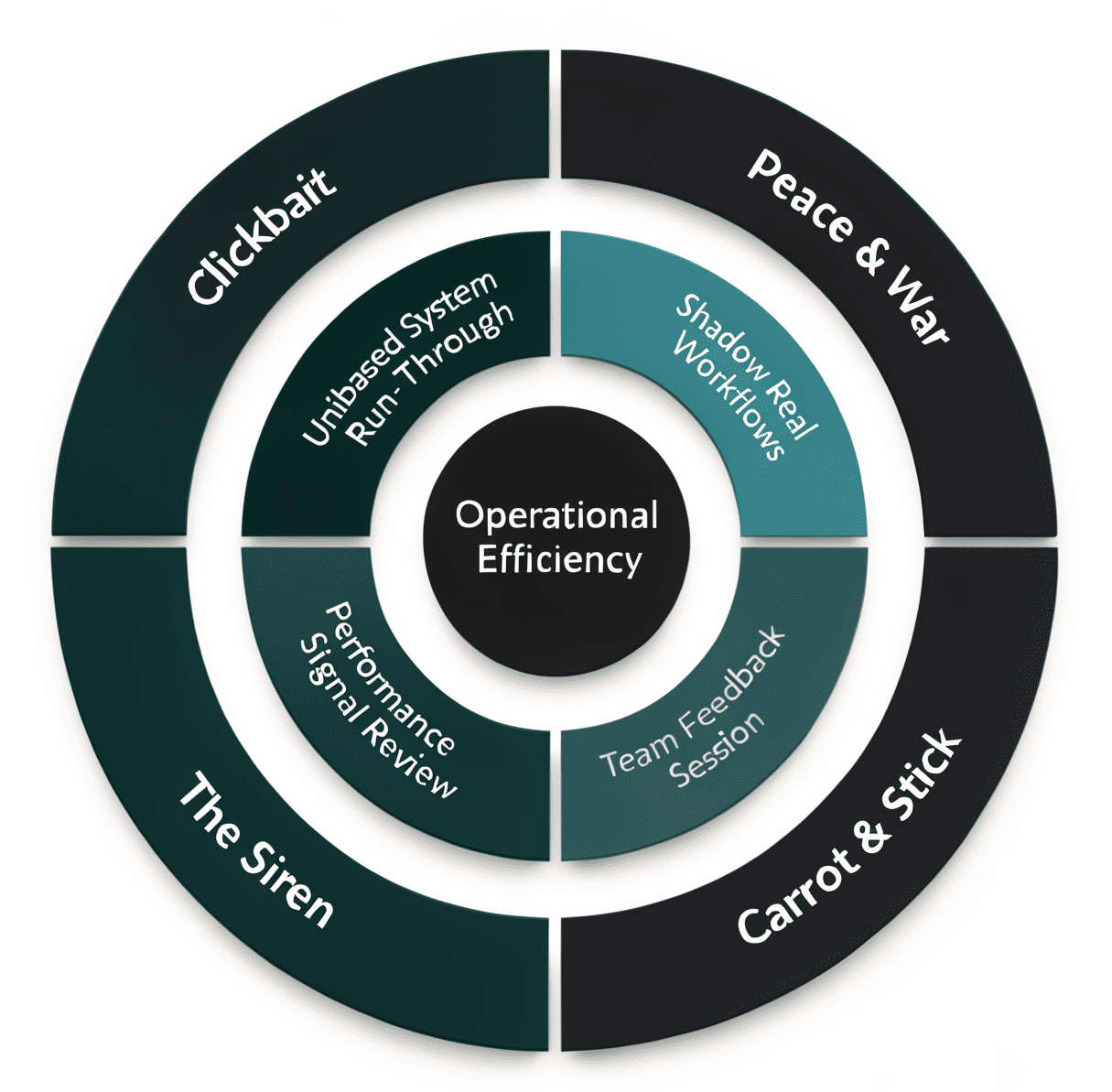
As people get used to workarounds over time, our method is designed to look through them and extract true data.
Clickbait
We navigate the system like outsiders. Where movement is smooth, the system is convincing. Where we get stuck, not.
Peace & War
We observe where daily work operates in peace and where the battles actually happen.
Carrot & Stick
Each step of the system receives a carrot or a stick. A playful approach to surface and discuss problems.
The Siren
We analyze customer signals and early warning signs to detect problems before they escalate.
F.A.Q.
What you might want to know
Key areas include strategy, customer experience, marketing, product, finance management, human resources, administrative structure, and specific operations.
It provides a clear, data-driven foundation for decisions, reduces project risks, improves employee engagement, and ensures better ROI on improvements.
While an audit may just focus on compliance or financial accuracy, a diagnostic aims to find root causes of underperformance and opportunities for improvement.
When the business is growing fast, experiencing declining performance, facing high operational costs, or planning to implement new technology.
The Library
Perspectives for change.

Hey Alexa – or why AI can’t replace structure
“Hey Alexa, add a 30-min meeting tomorrow at 10 with Neo.”[…]

Oh my, Marie – or the Geometry of Productivity
We all like order. Clean desks. Clear minds. Empty inboxes. A[…]

Where does the dog poop go? – or the Art of not knowing
My name is Wong. I came to this beautiful Western world[…]